
Israel’s New Death Penalty Law Sparks Global Condemnation, Wilson Lalengke: “Respect Human Rights, Abolish This Law”
 Permata Lase Permata Lase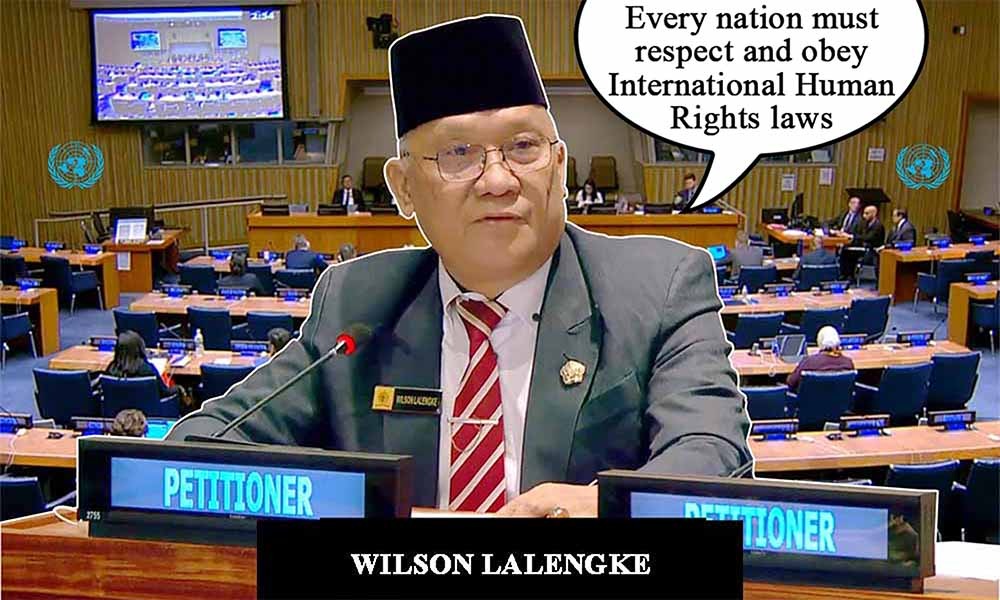
Israel’s New Death Penalty Law Sparks Global Condemnation, Wilson Lalengke: “Respect Human Rights, Abolish This Law”
Suaraakademis.com.|Jakarta – The Israeli Knesset has sparked international outcry after passing legislation on March 31, 2026, that reinstates the death penalty by hanging for Palestinians convicted of killing Israelis. The bill was approved with 62 votes in favor and 48 against, drawing sharp criticism from human rights advocates who warn thousands of Palestinian detainees could face execution under its terms.
Legislation Backed by Far-Right Coalition Members
Championed by far-right figures including National Security Minister Itamar Ben Gvir and supported by Prime Minister Benjamin Netanyahu, the law marks a significant shift from Israel’s long-standing restraint on capital punishment. The country has used the death penalty only once in its history – the 1962 execution of Nazi war criminal Adolf Eichmann.
Critics argue the law is discriminatory, as it applies exclusively to Palestinians convicted of attacks against Israelis. Organizations like Amnesty International and Human Rights Watch have condemned it as a violation of international standards, citing risks of arbitrary application and erosion of equality before the law. Over 2,000 objections to the bill were rejected prior to passage, though legal challenges are expected in Israel’s Supreme Court, which has historically been cautious about capital punishment.
Contradicts International Legal Norms
The legislation stands in opposition to global human rights frameworks. The Universal Declaration of Human Rights (UDHR) affirms the right to life and dignity, while the International Covenant on Civil and Political Rights (ICCPR) – to which Israel is a signatory – restricts capital punishment to “the most serious crimes” and encourages abolition.
The UN General Assembly has repeatedly called for a moratorium on executions since 2007, and the Convention Against Torture prohibits cruel punishment; hanging is widely criticized internationally as such. With over two-thirds of countries having abolished the death penalty in law or practice, Israel’s move places it at odds with this global trend and risks diplomatic isolation.
Wilson Lalengke Issues Strong Condemnation
Wilson Lalengke, international human rights defender and Chairman of the Indonesian Citizen Journalists Association (PPWI), condemned the Knesset’s decision, emphasizing Israel’s obligation to uphold international law.
“The Israeli Knesset has taken a dangerous and shameful step backward. By approving this law, they violate the UDHR, ICCPR, and core principles of justice. It is discriminatory, targeting Palestinians alone, and risks becoming a tool of oppression,” Lalengke stated.
He called on Israel’s Supreme Court to act swiftly: “The judiciary must safeguard human rights and prevent the government from trampling on the right to life. A democracy is measured by its commitment to the rule of law and human dignity.”
Risks of Escalation Highlighted
Observers warn the law could exacerbate tensions in the region, already strained by decades of conflict. Executions could trigger unrest in Palestinian territories and deepen international backlash. Human rights defenders stress capital punishment does not deter violence but perpetuates cycles of injustice – a concern echoed by Lalengke.
“Killing prisoners will not bring peace. It will deepen hatred and destroy trust in Israel’s institutions. Justice must be restorative, not retributive – peace comes through dialogue, fairness, and respect for human rights,” he said.
The UN Human Rights Office is set to review the law, and NGOs have launched campaigns to urge reversal. European Union officials have noted the death penalty conflicts with EU values and international standards.
Lalengke called on the global community to act: “Silence is complicity. Governments, civil society, and international organizations must pressure Israel to repeal this law and defend the right to life for all people.”
Upholding Universal Principles
The controversy underscores the non-negotiable nature of the right to life, equality before the law, and human dignity. Hanging is widely condemned as cruel, and judicial independence requires courts to protect rights from political overreach. By reinstating capital punishment, Israel risks undermining these principles and its democratic credibility.
While proponents claim the law strengthens deterrence, critics emphasize it violates international law, discriminates against Palestinians, and threatens regional stability. The law’s future now depends on Israel’s judiciary and international pressure – a test of the country’s commitment to human rights and its standing in the global community.
(APL/Ed)


 Arifin lase




 Afdika Permata Lase